
Host Community and Rohingya Refugees in Cox's Bazar: Needs Assessment, Sector Analysis, and Pathways for Chinese CSO Engagement
Chinese CSOs possess considerable technical expertise, practical experience, and resource mobilization capacity that could complement existing humanitarian and development efforts in Bangladesh. Their engagement could help strengthen community resilience, support income-generating activities, promote climate-smart agricultural practices, improve access to clean water and sanitation, and enhance local capacities for disaster preparedness and response.
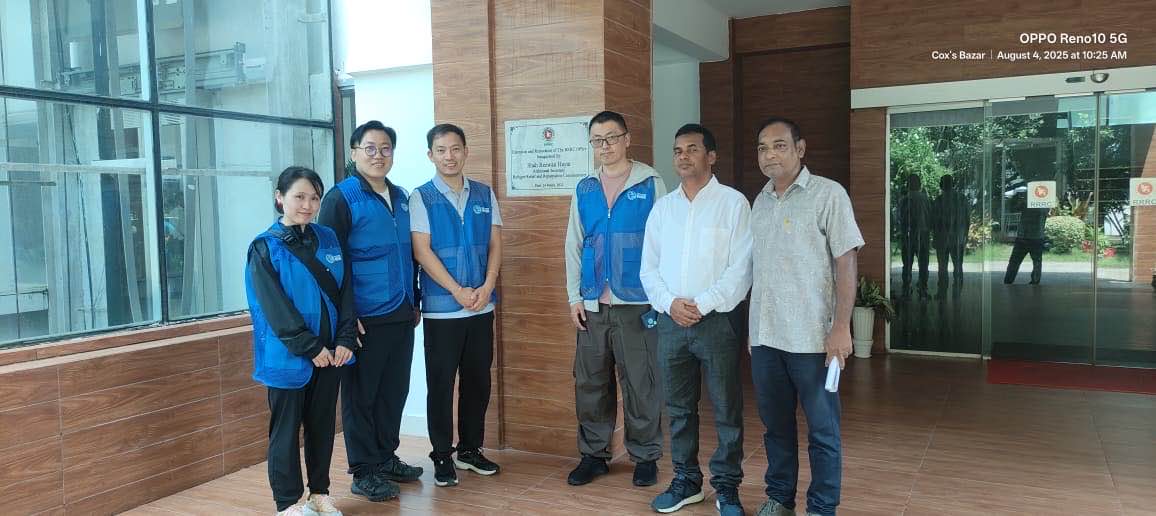
The Moulovibari Research and Partnership Hub (MoRPH) conducted a joint field study in Cox's Bazar, Bangladesh, from 4–7 August 2025, with the objective of examining the current humanitarian situation facing Rohingya refugees and identifying potential avenues for enhanced international cooperation. The study was carried out by a four-member team comprising Bangladeshi and Chinese scholars and researchers, reflecting a collaborative effort to strengthen knowledge exchange and explore opportunities for future engagement between Chinese civil society actors and the humanitarian response community in Bangladesh.
During the four-day mission, the delegation visited several key locations across Cox's Bazar District, including host communities in Ukhiya and Teknaf Upazilas, as well as two Rohingya refugee camps. These visits provided the team with first-hand insights into the socio-economic, environmental, and humanitarian challenges experienced by both displaced Rohingya populations and the Bangladeshi communities hosting them. In addition, the delegation held a high-level consultation meeting with officials from the Office of the Refugee Relief and Repatriation Commissioner (RRRC), the principal government institution responsible for coordinating and overseeing the Rohingya refugee response in Bangladesh. The meeting facilitated valuable discussions on existing challenges, priority needs, and opportunities for future collaboration.
Cox's Bazar currently hosts approximately 1.2 million Rohingya refugees, making it the largest refugee settlement in the world. Since the mass displacement of Rohingya populations from neighboring Myanmar, Bangladesh has continued to provide refuge and humanitarian support despite significant resource constraints. The refugee population now coexists with an estimated 2.5 million Bangladeshi citizens living in the surrounding host communities. While this coexistence has demonstrated remarkable resilience and solidarity, it has also placed substantial pressure on local infrastructure, natural resources, public services, and economic opportunities.
The prolonged nature of the displacement crisis has generated complex and interconnected vulnerabilities affecting both refugee and host populations. Challenges are particularly evident in sectors such as Water, Sanitation, and Hygiene (WASH), shelter, food security, livelihoods, agriculture, health services, education, disaster risk reduction, and climate resilience. Environmental degradation, including deforestation and pressure on limited land resources, continues to affect local ecosystems and agricultural productivity. At the same time, communities remain highly vulnerable to natural hazards such as cyclones, flooding, landslides, and the growing impacts of climate change.
The study also highlighted the increasingly difficult funding environment facing the humanitarian response. According to the 2025–2026 Joint Response Plan (JRP), an estimated USD 710.5 million is required to provide life-saving assistance and protection services to approximately 1.6 million people, including both refugees and members of host communities. However, by the middle of 2025, less than 35 percent of the required funding had been secured. This chronic funding shortfall, combined with the reduction or withdrawal of support from several major donors, has significantly constrained humanitarian operations.
As a consequence of these funding gaps, humanitarian agencies have been forced to implement a range of cost-cutting measures. Food assistance programs have experienced substantial reductions, affecting approximately 96 percent of refugee households and increasing the risk of food insecurity and malnutrition. Furthermore, several health facilities, education centers, and community support services have been scaled back or closed, limiting access to essential services for vulnerable populations. These developments underscore the urgent need for diversified funding sources and stronger international partnerships to sustain critical humanitarian interventions.
The field study identified several promising areas in which Chinese Civil Society Organizations (CSOs) could make meaningful contributions to the Rohingya response and broader development efforts in Cox's Bazar. In particular, opportunities were identified in the fields of livelihoods development, sustainable agriculture, disaster risk reduction (DRR), climate change adaptation (CCA), and WASH programming. These sectors align closely with China's extensive experience in rural development, poverty reduction, agricultural innovation, infrastructure improvement, and South-South cooperation initiatives.
Chinese CSOs possess considerable technical expertise, practical experience, and resource mobilization capacity that could complement existing humanitarian and development efforts in Bangladesh. Their engagement could help strengthen community resilience, support income-generating activities, promote climate-smart agricultural practices, improve access to clean water and sanitation, and enhance local capacities for disaster preparedness and response.
In this context, MoRPH is strategically positioned to serve as a knowledge broker, research partner, and partnership facilitator between Chinese civil society actors and the established humanitarian architecture in Cox's Bazar. Through evidence-based research, stakeholder engagement, policy dialogue, and partnership development, MoRPH can help bridge institutional and cultural gaps while fostering effective collaboration among government agencies, humanitarian organizations, development partners, academic institutions, and civil society organizations. Such cooperation has the potential to contribute not only to addressing immediate humanitarian needs but also to supporting longer-term resilience, sustainable development, and social cohesion for both Rohingya refugees and Bangladeshi host communities.
Discussion
No comments yet
Be the first to share your thoughts on this project!