Economic Forecast: Bangladesh (2025–2030)...
Economic Forecast: Bangladesh (2025–2030)
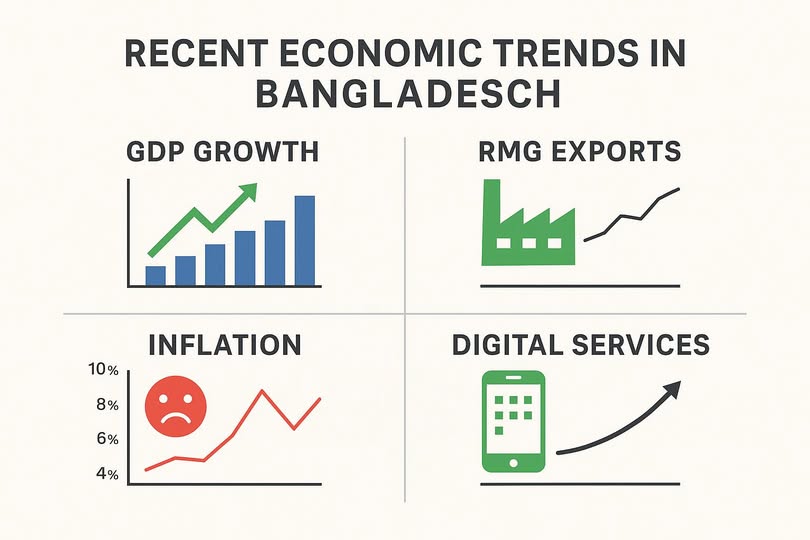
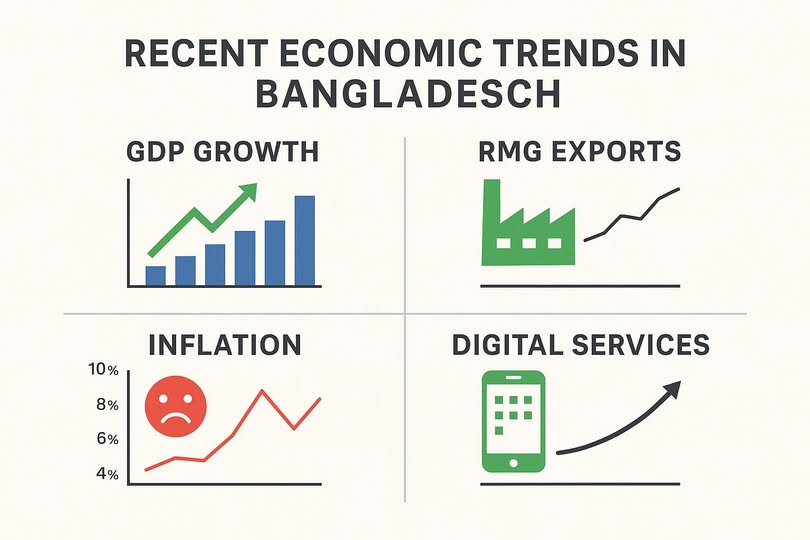
Bangladesh is expected to maintain moderate but steady economic growth over the next 2–5 years, likely in the range of 4.5% to 6% annually, positioning it ahead of many peer economies if global market conditions remain stable. Growth will be driven primarily by the continued resilience of the ready-made garments (RMG) sector, strong remittance inflows from overseas workers, public infrastructure investment, and the rapid expansion of digital services.
The RMG sector—which accounts for the majority of export earnings—is likely to remain competitive due to cost advantages and a well-established supplier network. However, the sector’s performance will depend heavily on demand from key markets in the United States and European Union. Efforts to diversify into higher-value textiles and compliant production practices could strengthen export earnings over the medium term.
Remittances will continue to provide a crucial source of household income and foreign currency. While migration to Gulf and Southeast Asian countries is expected to remain strong, remittance inflows could be volatile if overseas labor market conditions change.
Public investment in transport, energy, and port infrastructure will boost productivity and create long-term growth potential. However, these projects also add fiscal pressure, requiring careful debt management and prioritization of high-return investments. The digital economy—including IT outsourcing, fintech, and e-commerce—offers a promising diversification path, provided that skills development and connectivity improve.
Key risks to the outlook include:
1. Global apparel demand shocks affecting RMG exports.
2. Declining remittance flows due to changes in overseas labor markets.
3. Persistent inflation or exchange rate volatility if price pressures are not managed effectively.
4. Climate shocks—such as floods and cyclones—that could disrupt agriculture, infrastructure, and supply chains.
Policy priorities should focus on maintaining macroeconomic stability, diversifying the export base, strengthening social safety nets, and investing in climate resilience. By addressing these structural challenges, Bangladesh can not only sustain growth but also enhance economic resilience, ensuring that development gains are broadly shared over the next decade.